What It Takes to Feed a Million Kids – World Food Day 2026
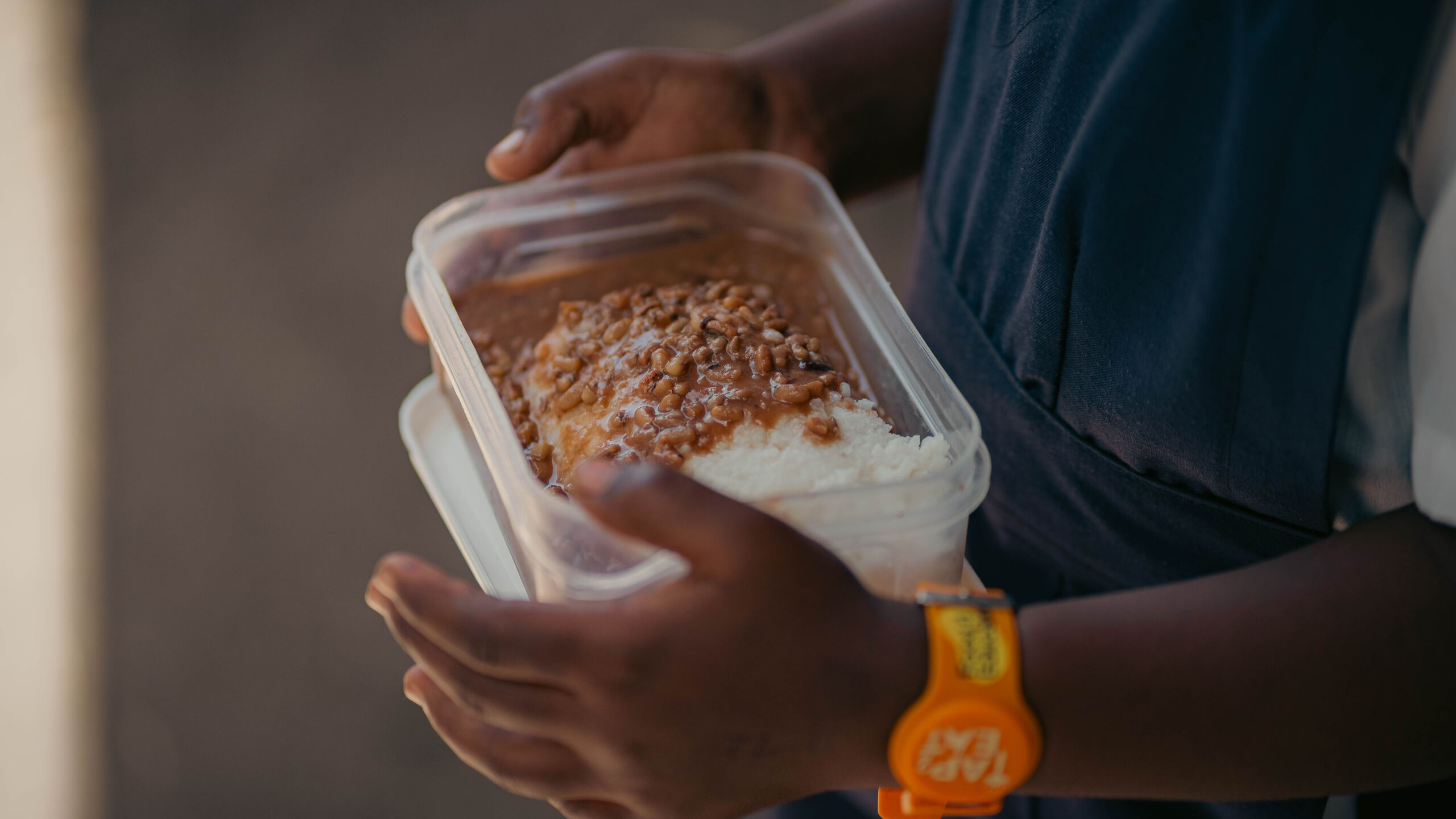
Five perspectives on the school feeding economy — and why the meal in front of a child is really an investment in everything behind it.
Every school day in Kenya, Food4Education serves 700,000 children. By next year, we’ll reach one million. So far, we’ve served more than 250 million meals — and built an entire economy to deliver them: farmers, suppliers, kitchens, trucks, technology, and the tens of thousands of people whose livelihoods depend on all of it working.
This World Food Day, the global theme is “Innovate today. Nourish tomorrow.” At Food4Education, we think one of the most powerful places to do that innovating is somewhere familiar: the school meal.

The economic power of a school meal
A school meal is one of the best investments we can make in a child. But at scale, it stops being just a nutrition program — it becomes economic infrastructure.
Every meal creates demand for farmers, work for suppliers and transporters, opportunities for local businesses, and jobs along the whole value chain. Food4Education has already deployed more than $200 million into Kenya’s economy through its operations and supply chains. By 2030, that figure is projected to top $450 million, including roughly $150 million going directly to farmers.
Africa is the world’s youngest continent. By 2050, one billion children will have come of age on the continent, representing 40% of the world’s youth. But turning this extraordinary demographic asset into an economic advantage requires investing in their potential today. The choices we make now will shape Africa’s economy, and the global economy, for generations to come. Our ambition is to build Africa’s school feeding economy — locally rooted, financially sustainable, and built to last.
Wawira Njiru – Founder & CEO

Scale demands discipline
Two in three people across Africa cannot afford a healthy diet (SOFI 2026). So how do we make nutritious meals affordable for millions of children? At Food4Education, that’s a question we work through every day. Feeding 700,000 children takes far more than cooking. It takes kitchens, procurement, logistics, technology and thousands of people working together. Our obsession with getting every detail right is our superpower. At this scale, even small inefficiencies add up quickly.
This is where cost-per-meal economics becomes non-negotiable. The true cost of a meal goes well beyond its ingredients. It depends on how accurately we forecast demand, how we buy food, how efficiently our kitchens run and how much waste we eliminate. Our proprietary Tap2Eat platform processes around 2 million transactions daily, helping us manage payments and track meals while generating information we can use to improve how we operate.
We now support more than 6,000 jobs across our operations and supply chain. As we work towards a million meals a day, the challenge is to maintain that same level of precision while expanding our reach. The people, systems and infrastructure behind every healthy, delicious meal must grow together.
Wairimu Nyandia – Chief Operations Officer

Learning what works, and why
Meal counts tell us how many children we’re reaching. They don’t tell us what those meals make possible. Our research suggests that every dollar spent on school feeding generates another two dollars in the local economy. But what does that look like in people’s lives? Does a child concentrate better in class? Does a parent have a little more money to spend? Does a farmer have the confidence to grow their business because they know there’s a reliable buyer? A school meal can set off changes far beyond the classroom.
And we’re still learning. What makes school feeding affordable for families and governments? Which approaches work best in different communities? How do we know the benefits will last? We’re testing, researching and comparing different ways of delivering school meals, because the answers matter when governments decide where to invest and how to reach more children.
Philanthropy plays a special role here. It gives us room to experiment, ask difficult questions and build the evidence governments and partners need to invest with confidence. After close to 15 years of delivering meals, we have an extraordinary opportunity to turn what we’re learning into knowledge others can use. That’s what excites me most: something we discover in one community could help improve school feeding for millions of children elsewhere.
Lia Mayka Mumbo – Head of Impact

From commitment to delivery
A good program can show what’s possible. But reaching millions of children, year after year, takes government ownership, investment and partnerships that last. In Kenya, we’re seeing what happens when school feeding becomes public infrastructure. Today, more than 700,000 children are fed daily across 19 counties. Fifteen of the 29 centralized kitchens supporting this system have been financed and built by government, while county co-financing alongside affordable parent contributions helps sustain delivery. A transparent cost-per-meal model gives governments something they can plan and budget against, and Tap2Eat provides a traceable, verifiable system for managing meals.
Now we’re bringing these learnings into our technical assistance work across more than 10 African countries, including Zambia, Uganda and Ethiopia. Every country is different. What works in Nairobi won’t necessarily work in Lusaka or Addis Ababa. So we work alongside governments to understand what they need, whether that’s better procurement, kitchen infrastructure, financing or the capacity to run a national program. The goal isn’t to copy Kenya. It’s to help each country build and own a system that works for them.
Of course, none of this happens without money. Financing is often where good intentions get stuck. Through the End School-Age Hunger Fund, developed with the African Development Bank and the Children’s Investment Fund Foundation, we’re working to help countries access the investment needed to expand school feeding and build sustainable domestic financing. For me, success is when governments have the knowledge, resources and confidence to run these systems themselves. When school meals become something children and families can count on, year after year.
Vincent Gitau – Government Relations Lead

The market behind the meal
For farmers, growing food is only half the job. The other half is knowing there will be a market for what they produce, at a price that makes the effort worthwhile. That certainty is becoming harder to find as floods and droughts disrupt harvests, and global shocks increase the cost of fertiliser, fuel and transport. Producing more food matters, but production alone is not enough if farmers and food businesses cannot rely on consistent markets.
School feeding can deliver both. Food4Education sources about 80% of its food locally, creating consistent demand for agricultural produce and supporting Kenyan farmers, aggregators, suppliers, and transporters. This predictable demand gives farmers greater confidence to plan their production and businesses a stronger basis to invest and grow.
Predictable demand can also help these businesses plan, invest and strengthen their case for financing. And because we are feeding children, it matters what that demand is for. Well-designed school menus can send a clear market signal for nutritious foods, helping align supply with the foods children need for healthy growth and development.
Resilient food systems also need flexibility. When maize prices spiked in 2022, we adjusted our menus to include more rice, beans and lentils rather than pass those costs on to families. And in Term 1 when around 5,000 smallholder farmers were facing a surplus mango harvest with limited market options in Murang’a, we purchased 1.3 million mangoes for school meals. Experiences like these show what institutional demand can make possible when it is responsive to what is happening in local markets.
For me, that is an important part of what resilience looks like: keeping children fed while creating stronger, more dependable markets around the food systems that serve them.
Stella Kimani – Senior Manager, Policy
It starts with what we build today
School feeding connects a child’s ability to learn to a farmer’s ability to earn. It gives local businesses a customer, governments a practical way to invest in human capital, and a generation of young people a reason to believe the investments made today are for them.
Our next milestone is one million meals a day next year. This World Food Day, “innovate today, nourish tomorrow” is a reminder that the future of food is shaped by the systems we choose to build. At Food4Education, that work is already underway.
