Announcing our Pan-African Strategy
Twelve years ago, we planted a tiny seed. That seed was feeding 25 kids a day in Ruiru Primary School, in the town I grew up in.

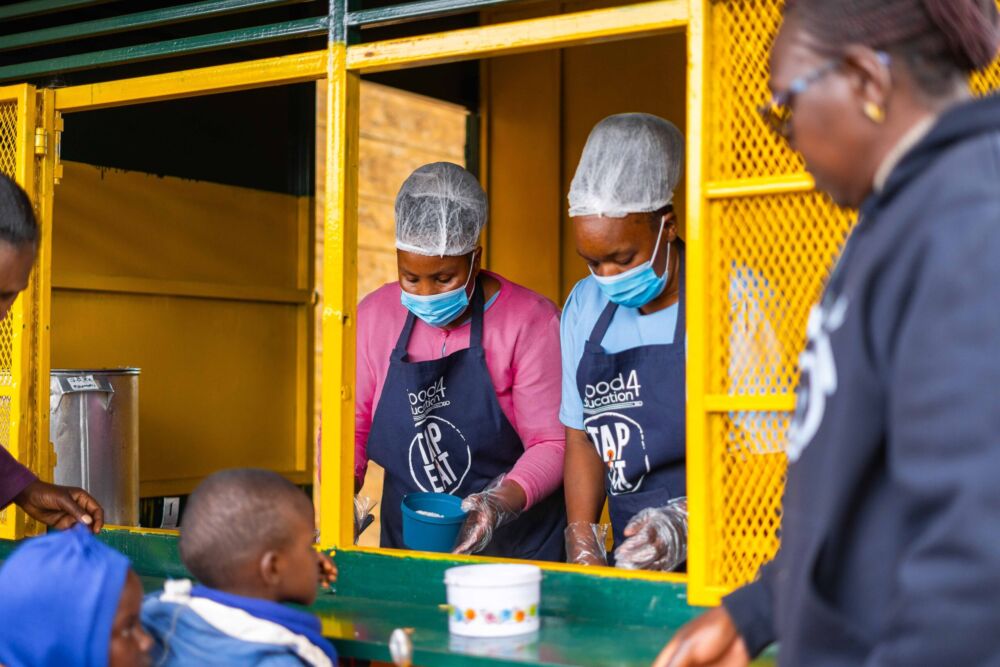
Since then, we have delivered over 70 million school meals in Kenya and today serve over 450,000 children daily in over 1,200 schools.
We continue to see first-hand the impact that hot, affordable, and nutritious meals can have on hungry children – increasing attendance, enrollment, and school performance. Our nutritional research shows that 100% of children eating Food4Education meals meet daily dietary diversity requirements. These meals have been a critical lifeline for hundreds of thousands of students like Jackson – one of Food4Education’s first cohort of students in 2012 who stayed in school because he could eat daily. He proceeded to high school, passed and was admitted to college, and now works as part of the Food4Education team.

It goes beyond
Outside the classroom, providing school meals has had more impact on communities and livelihoods in a way I could not have imagined. From Mama Mercy, our first cook who still works with us, we have created over 3,500 direct jobs and tens of thousands more through our expanding supply chain. From those in the construction industry who build our state-of-the-art kitchens to those who manufacture our equipment – some of whom are informal (jua kali) artisans like Peter, who has supplied 12,000 food distribution containers to us over the years that are specifically made to keep food hot and safe. Hundreds of thousands of farmers in 13 counties today now access a direct market for their fresh produce. Distributing over 200 tonnes of food a day has significantly impacted Kenya’s economy, creating jobs and stable incomes.
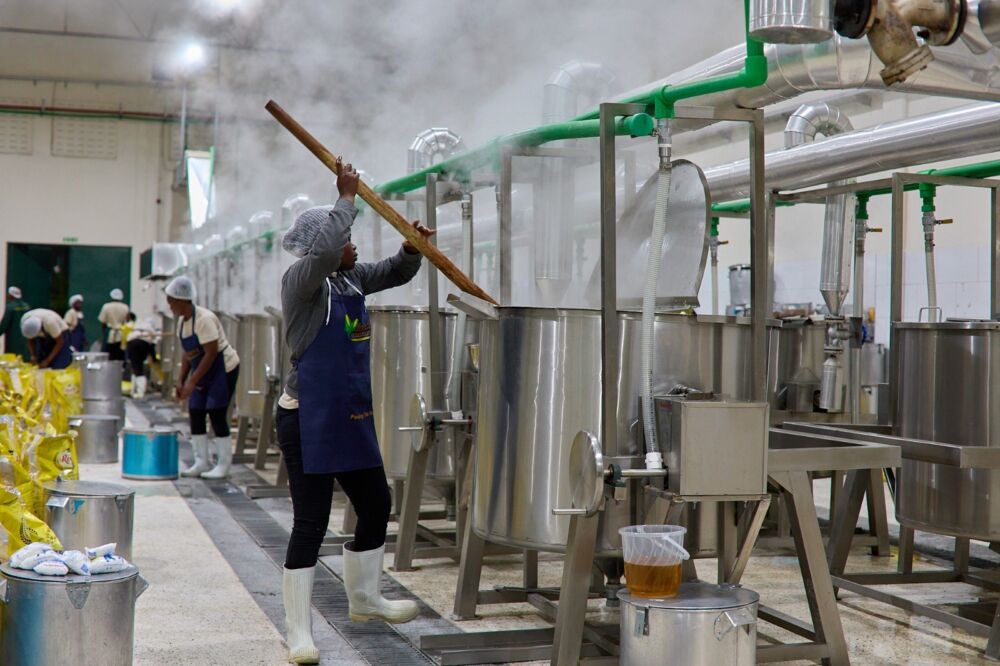
We’re actively contributing to a better planet by investing in climate friendly cooking methods. All our central kitchens use clean energy – eco-briquettes produced right here in Kenya and steam energy that halves cooking time. As such, we don’t have to rely on firewood and charcoal like historic school feeding programs on the continent. We use solar energy to cut cooking time. I’m especially proud of our giga kitchen, Africa’s largest clean-cooking facility that uses steam powered by eco-briquettes and prepares 60,000 meals at a go in Nairobi County.
Despite these efforts, the problem of childhood hunger still has not been solved. Globally, we are falling behind with a recent Goalkeepers report by the Bill and Melinda Gates Foundation declaring that the world’s worst child health crisis is malnutrition. Climate change only exacerbates this crisis, making it worse. Earlier this year, UNICEF reported that 64 million kids in Africa under the age of five – 1 in 3 of children – are experiencing severe child food poverty.
Today, I’m excited to share Food4Education’s new bold and ambitious direction that will position us for even greater impact across Africa.
We have designed a blueprint to mainstream school feeding programs across the continent and are investing in creating impact for 3 million children by 2030. We have a three-pronged approach to achieve this.

1M daily
First, we will triple our impact to feed 1 million children daily by partnering with more county governments and the Kenyan national government to provide more affordable and nutritious meals for children and their families. We will focus on regionally distributed growth that increases our geographical footprint and reaches kids who need school meals the most.
Knowledge Sharing
Second, using our decade-plus of experience linking local supply chains, engaging parents and communities, we will work with 2 African countries to provide technical advice and support them to localize, scale, and operationally improve their school meals programmes. Being a locally-founded and grown organization, we have developed a specific expertise on what it takes to start and scale locally rooted supply chains that deliver with excellence. We are in the process of identifying these partnerships.
A Center of Excellence
Third, we want to share what we know through a Center of Excellence that teaches those who want to start and scale school feeding in their communities. When I was starting Food4Education, I travelled to India to visit Akshaya Patra, one of the world’s largest school feeding programs to learn how to build and scale a school feeding organization. I was impressed and inspired by their commitment to operational excellence which formed a bedrock of how Food4Education operates, localized to our context. They remain our technical advisers and partners to date. Now, we want to create that same experience right here on the continent for other African school feeding programs. Throughout Africa, there exists a deep ecosystem of actors with a varied range of school feeding experience. As proven implementers, we want to share what we know to build a deep ecosystem of local, impact-driven school meal providers.
When I was a child, I’d watch stories of hungry children like me on television. Today, I am excited about our new strategic direction that brings a solution to this built by Africans for Africa.
This is truly an exciting time for Food4Education. As we bring our Pan-African vision for school feeding to new countries, we will be growing our strategic philanthropic, government and community partnerships to ensure that no child has to learn on an empty stomach.

